


Deep in Kalpa’s upper valleys, tucked between snow and stone, something happens each spring that feels less like a festival and more like a secret the land finally whispers aloud. The Raulane Festival—a ritual locals say is five thousand years old—isn’t flashy. There are no vendors hawking trinkets, no staged performances, no dates locked into a calendar. Instead, when the mountain spirits are ready to leave, the village gathers.
For months, villagers believe the Saunis—celestial fairies born from frost and moonlight—have descended from the high meadows called kanda to watch over families, livestock, and fields through Himachal’s brutal winters. When the harshness softens and spring nudges through the snow, it’s time to send them home. That goodbye is Raulane.
I say “believe,” but watching it unfold, the word feels thin. There’s no room for skepticism inside that temple courtyard.
The Core: Two Men, One Sacred Purpose
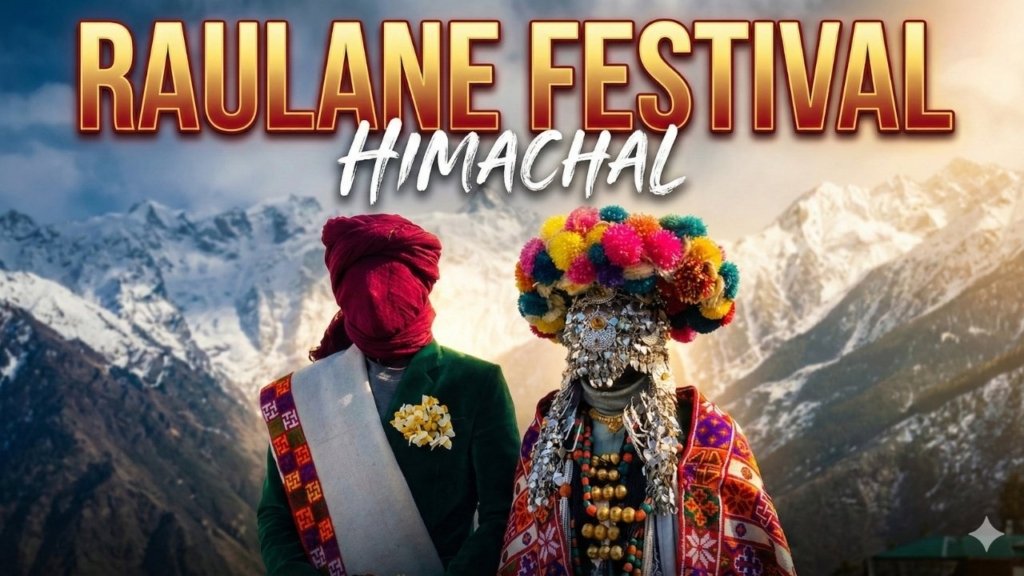
At the heart of Raulane stands an unusual pair: the Raula (groom) and the Raulane (bride)—both played by men. Before you think “costume party,” understand this differently. These aren’t performers chasing applause. They’re vessels, stand-ins for something older than the people wearing the clothes.
Elders from each saring (neighbourhood cluster) select the men, often young, and begin the transformation early on festival day. Heavy Kinnauri wool wraps their bodies. Ancestral silver jewellery—pieces pulled from family trunks—adorns their wrists and chests. Their faces vanish under carved wooden masks with strong, unyielding features.
The masks matter. A human face would make the ritual ordinary. A hidden face becomes a doorway. Villagers describe it this way: the masks allow the wearer to step into a liminal, sacred space where the line between human and celestial blurs.
The Raula’s face is bound in red cloth. The Raulane wears an elaborate floral crown—flowers called Chamka, Narkasang, and Bakhri Kan—each bloom sourced locally, each choice rooted in custom.
The Procession and the Dance
The ritual begins with movement through the village streets. Drummers play the Dhol Damau—low, resonant beats that echo off stone. The masked pair walks slowly, deliberately. Villagers chant, laugh, sometimes tease playfully. There’s levity here, but it’s grounded. Real.
Then comes the Sattu throwing—barley flour tossed at onlookers, recalling Holi’s playfulness while symbolising abundance and blessing. For a moment, the festival feels almost like any other celebration. Then the pair enters the temple.
Inside the Nagin Narayan Temple (also called Narayan or Nara Narayan), everything shifts. The music softens. The walking slows. What unfolds is a dance—but “dance” undersells it. The movements are trance-like, deliberate, almost meditative. There are no leaps, no flourishes, no ego. Every step communicates something wordless: a prayer, a farewell, a bridge between worlds.
Locals say this is the moment when the veil thins. The Saunis are listening, watching, preparing to return to their mountain homes. The dance isn’t meant for the crowd. It’s meant for them.
The slow movements carry requests: protection for livestock, good harvests, safety through the next winter, harmony that endures beyond the season.
Correct Timing for Raulane Festival
The Raulane Festival doesn’t have a single fixed date—timing varies by village and year, which can confuse outsiders. Here’s what the sources confirm:
Primary Season:
- Raulane is celebrated in late winter or early spring—usually soon after Holi (around March–April).
- Some sources describe it as a winter festival, others as a spring ritual. Both are technically accurate because it falls at the transition point—when winter ends and spring begins.
2026 Expected Date:
Why the Confusion?
- Different villages in Kinnaur (Kalpa, Kothi, Sangla) celebrate on slightly different days.
- Some villages hold it at the close of winter, others wait until spring properly arrives.
- The festival can last 5–7 days in some villages, or just a single afternoon in others.
- There’s no fixed calendar date—locals decide based on seasonal shifts, elder guidance, and traditional signs.
Why “Winter” and “Spring” Both Appear:
- The festival is a farewell to the Saunis (mountain fairies) who protect villagers during winter. The ritual marks the end of their protective presence as spring arrives—so it sits right at that seasonal boundary.
The November 2025 timing appears to be tied to viral photos, not the actual festival date.
Here’s what actually happened:
The Real Timeline:
- Raulane Festival is traditionally celebrated in late winter/early spring — typically after Holi (which falls in March–April).
- For 2026, it’s expected on March 7, after Holi.
- The festival usually lasts 5–7 days and follows no fixed calendar date—timing shifts by village and year.
Why November 2025 is Everywhere Now:
The viral photos and videos circulating in November 2025 are NOT from the 2025 festival itself. They’re likely from previous years’ celebrations that suddenly went viral on social media in November 2025.
Sources note: “The Himalayan Tradition That Just Went Viral” and “Internet is swooning over a 5000-year-old Himachal festival” — these were posted in mid-November 2025, but they’re discussing archived footage or past recordings of the festival.
Bottom Line:
Raulane was not celebrated in November 2025. The festival happens after Holi (March–April). What’s happening in November is the viral explosion of old festival videos and photos online—not the actual celebration itself.
The next real Raulane Festival will be in March 2026, around March 7.
Why It Matters: Beyond Tourism
Here’s what outsiders often miss: Raulane was never built for them. It exists for the community, which is precisely why it feels authentic.
Men who wear those masks don’t perform for applause. They perform for ancestors, for cattle, for crops, for their families, and for the Saunis they believe will return to bless the village with warmth, safety, and abundance.
More than a festival, Raulane is a statement of identity. Families bring ancestral jewellery out of old trunks. Elders retell stories. Every generation joins in, keeping the tradition rooted as a cultural anchor.
In a world rushing toward plastic decor and artificial spectacle, this festival persists with wool, handmade ornaments, and faith. It survives not because it’s ancient, but because it still makes sense to the people who keep it alive.
FAQs
Raulane happens in late winter/early spring, typically 2–3 days after Holi (around March–April). For 2026, expect it around March 7. The exact date isn’t locked to a calendar—it depends on when village elders feel the Saunis (mountain fairies) are ready to depart. Don’t rely on a fixed date. Call a local homestay in Kalpa or ask tourism offices in Kinnaur a week before you plan to go.
From Delhi, the drive is roughly 570 km via Shimla. Most travelers fly into Shimla Airport (250 km away), then drive 8–10 hours south through Narkanda, Rampur, and Reckong Peo before reaching Kalpa. There’s no direct train—Shimla Railway Station is the nearest railhead. Budget 2–3 days for travel if you’re coming from a major city.
There’s no entry fee for the festival itself—it’s free. Costs depend entirely on accommodation and meals. Budget homestays in Kalpa run ₹1,500–3,000 per night; mid-range guesthouses, ₹3,000–5,000. Food is cheap—a meal at a local eatery costs ₹150–400. Hiring a local guide (optional but useful) runs ₹800–1,500 per day. Realistically, budget ₹5,000–10,000 per day if traveling solo, including transport, food, and lodging.
Kalpa has no big hotel chains. Most visitors stay in homestays, guesthouses, or small family-run inns. Book in advance (at least a month before the festival) because the village fills up quickly. Ask for recommendations from online travel blogs or contact the Kinnaur District Tourism Office. Homestays often include meals and can connect you with local families who actually celebrate the festival.
This gets tricky. No photos or videos during the temple rituals themselves—this is sacred ground. Many villagers view recording as disrespectful. Street processions and outdoor parts are sometimes okay to film, but always ask permission first and respect if someone says no. The community values the ritual’s sacredness over content. If you’re there for authentic experience rather than Instagram, ask locals before pulling out a camera.
It’s early spring but still cold in the mountains—bring a warm jacket, layers, and a hat. Kalpa sits at high altitude, so mornings and evenings are chilly despite the season. Wear comfortable walking shoes for the procession and temple visits. The village has basic shops but limited supplies, so bring any medications, sunscreen, or personal items you might need.
Yes, absolutely. Kalpa is a gorgeous Himalayan village year-round. You can visit the Nagin Narayan Temple, explore the local market, trek nearby meadows, and stay in homestays. But the Raulane ritual itself only happens during that spring window—you’d miss the core experience if you arrive outside that time frame.
Viral photos and videos circulated in November 2025, showing masked men in ornate Kinnauri attire performing slow, meditative dances. Social media picked it up, and suddenly this ancient ritual became a global curiosity. The photos are real; the timing confusion isn’t—most of those videos were from previous years, not November 2025. The festival itself isn’t celebrated then.
It’s genuine local belief, not invented for tourists. Kinnauri communities truly believe in Saunis—celestial beings or fairy-spirits who descend from high mountain meadows (kanda) during winter to protect villages, livestock, and fields. When spring arrives, the community gathers to bid them farewell and thank them for a safe season. Whether you believe in literal spirits or interpret it as honoring nature and community bonds, the ritual carries real meaning for the people who practice it.
